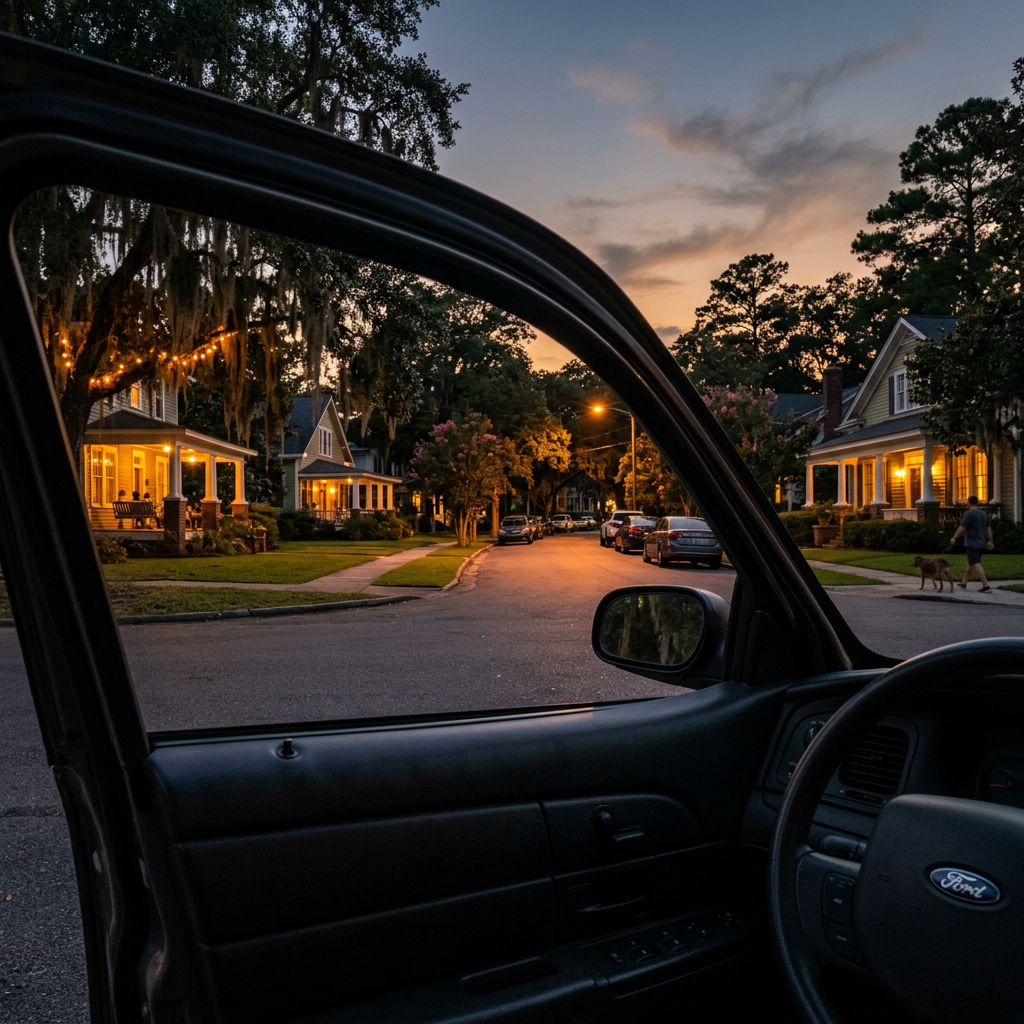
The last days before I left Clarksdale didn’t feel like a decision — they felt like a realization. A slow, heavy one. The kind that settles in your chest before you’re willing to say it out loud. I didn’t wake up one morning and think, I’m leaving. It was more like the town itself whispered, There’s nothing left to hold you here.
I remember driving through the neighborhoods I grew up in, the ones that used to feel full even on quiet days. But by then, the quiet wasn’t peaceful — it was hollow. Houses that once held whole families now sat dark, sagging under the weight of years without care. Yards that used to be trimmed for Sunday pride were overgrown, wild, tired. Even the porches looked lonely, like they were waiting for footsteps that weren’t coming back.
Snob Hill — the place folks used to talk about with a mix of envy and humor — had already turned into Hope Hill. And Hope Hill was trying, bless it. You could see the effort in the way a few houses still kept their lights on, still swept their porches, still hung a wreath at Christmas. But the shine was gone. The value was gone. The people were gone.
And that’s what hit hardest:
everybody was gone now.
The ones who raised me, the ones who shaped me, the ones who made the town feel like a living thing — they had all drifted away. Some left for work. Some left for better chances. Some left because staying felt like drowning. And some left this world altogether.
In those last days, I felt like I was walking through a memory instead of a town. I’d pass houses and see not what they were, but what they used to be. I’d see porch lights that once meant safety. I’d see yards where kids used to run barefoot. I’d see driveways where laughter lived. And now all of it was quiet.
There’s a particular ache in being one of the last ones left — in carrying the weight of a place that no longer exists except inside you. I felt it every time I turned down a street that used to feel familiar and now felt foreign. I felt it when I realized I could count the occupied houses on one hand. I felt it when I saw the boarded windows, the peeling paint, the silence.
Leaving wasn’t about wanting something bigger.
It was about accepting something smaller —
the truth that Clarksdale had already let go of me long before I let go of it.
On my last night there, I sat in my car for a long time before pulling out of the driveway. The air was thick, the way Delta air always is, but it felt heavier that night. Like the town was holding its breath. Like it knew I was leaving. Like it knew I wasn’t coming back.
I looked at the house, at the street, at the porch light glowing like a little lantern in the dark. And I realized that porch light wasn’t for me anymore. It was just a habit — a leftover gesture from a time when people still came home late and needed to see their way to the door.
When I finally drove away, I didn’t cry.
Not then.
The tears came later, in places where nobody knew my history.
But that night, I just felt the weight of the silence behind me.
Leaving Clarksdale wasn’t an escape.
It was a grief.
A necessary one.
A quiet one.
The kind you carry with you long after the road takes you somewhere else.
And even now, miles and years away, I can still see that porch light in my mind — glowing for a town that emptied out, glowing for people who left, glowing for memories that won’t ever leave me.
That was the night I understood something simple and hard:
you don’t just leave your hometown.
You leave the version of yourself that belonged there.
And that’s where the next part of the story begins.
Barney Jaime Pearson

Leave a Reply