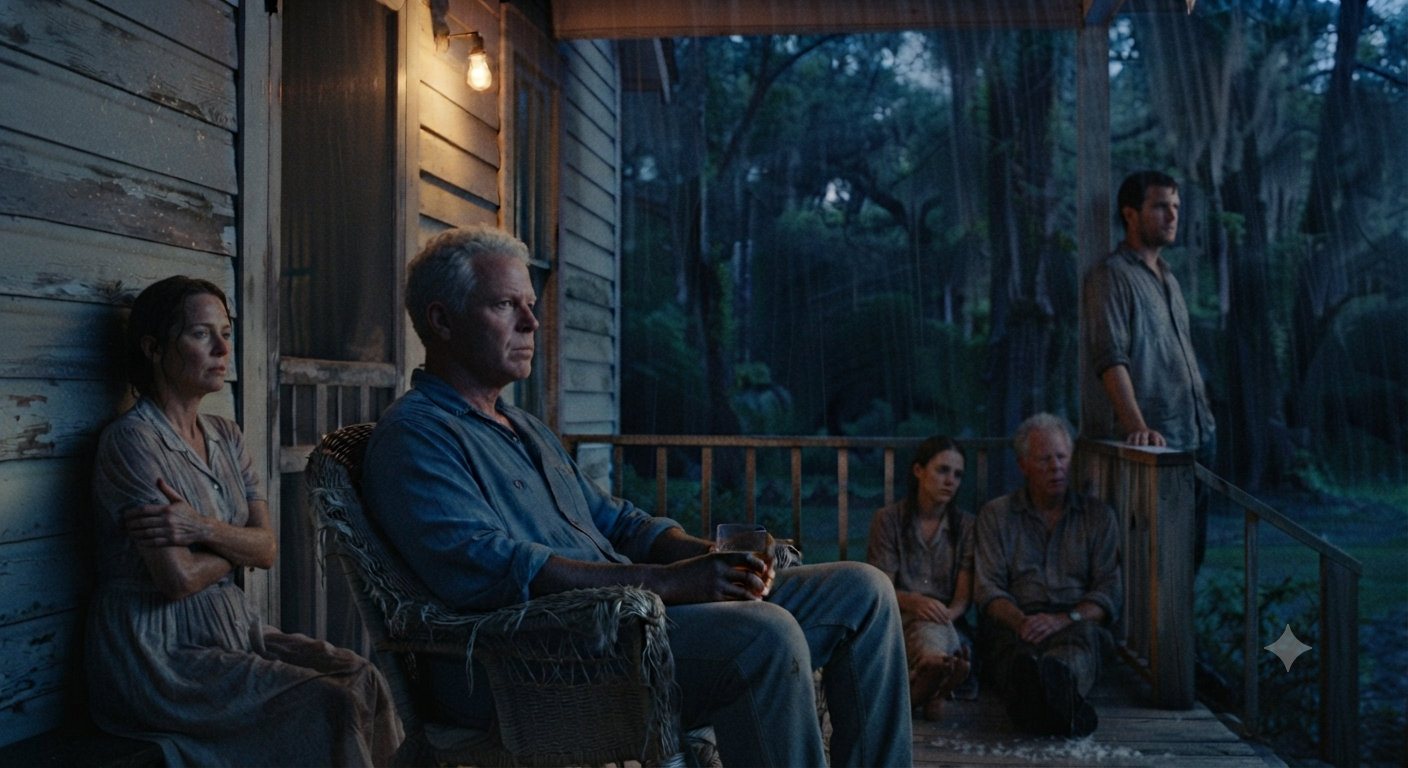
A man fails in the most ruinous way when the people who once loved him are left to heal from what he did to them. He hit. He controlled where they went, who they talked to, what they wore, until their whole world had shrunk down to the size of his temper. Down in the Delta, storms don’t just pass — they take. And what he did took something too: the version of them that existed before they learned to read his moods like weather, before they flinched at a door closing too hard.
I look back at the wreckage — the faces that once stood closest to him — and I feel a particular ache for the ones who stayed. They held on long after the bruises started, long after the apologies stopped meaning anything, believing in a man who had already given up on being decent. Their loyalty cost them more than it should have, and I carry the sorrow of knowing not everyone made it out.
And then there are the others. The ones who never took a hit from him but circled anyway, drawn to what was left standing. His flying monkeys, forever fetching for a man who never once fetched for anybody but himself. They carried his version of the story into rooms I wasn’t in — softened what he did, sharpened what I did, made sure the account came out even when it never was. Some of them I understood. They were scared, or young, or so deep in his weather they couldn’t tell anymore which way was out. But some chose it. Chose him, over and over, long after there was nothing left to misunderstand.
I used to lie awake trying to figure out what he gave them that made it worth it. A place to belong, maybe. The relief of being on the side that hits instead of the side that gets hit. Now I think the answer is simpler and sadder than that: some people would rather be someone’s weapon than stand alone and face what they let happen. Being useful to him was easier than being honest with themselves. And so they flew when he pointed, and they’re flying still, as far as I know — carrying his weather into new rooms, for a man who will use them up the same way he used up everyone before them. I don’t hate them anymore. I just know better than to wait by any door they might come through.
And braided through that grief is the quieter truth that I did survive. I walked out of a house he made dangerous. Down here, survival isn’t talked about like a blessing — it’s something you carry in your bones, a weight that doesn’t leave when the shouting stops, when the door finally stays shut behind you for good.
Healing starts in the hush. Porch light flickering, cicadas droning on, the night thick enough to swallow a name. People bury their hurt deep and tend it slow, learning to trust a house again, a doorframe, a raised voice that isn’t his. If they’re still healing from what he did — the hitting, the fear, the years of walking careful in your own home, and the ones who still fly for him — then he wasn’t just a mistake. He was violence with a name and a face. A story told low, because saying it loud still costs something.


Leave a Reply